5/5 ratings | Care Anytime
 Skip to content
 Agoraphobia is a serious mental health problem that should not be ignored – unless you seek professional guidance and support, your daily activities may be significantly limited, and you may suffer from co-occurring mental health conditions such as social anxiety disorder and paranoia as well as physical health complications and illnesses for years to come.
Agoraphobia refers to an anxiety disorder that affects people who choose to avoid situations and locations that might make them feel anxious.
If you feel like you are about to panic when you are using public transport, spending time surrounded by numerous people, or traveling far from your home, it is not a normal reaction to these harmless activities.
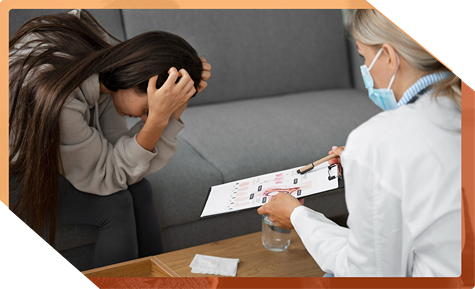
You should be able to recognize the key characteristics of agoraphobia to arrange a consultation with a specialist – pay attention to the following signs:

Learn more about the person’s physical health with a thorough physical exam – rule out physical and neurological conditions that may cause symptoms similar to agoraphobia.
Assess their mental state, explore their medical history, and ask them questions about the impact of agoraphobia on their everyday life to know what kind of treatment strategy may be the most efficient.
Monitor the individual to ensure there are no underlying mental health conditions you might have missed during the initial evaluation and ask them to be mindful of their mental health as well – co-occurring disorders can make the process of recovery more challenging.
Learn more about the person’s physical health with a thorough physical exam – rule out physical and neurological conditions that may cause symptoms similar to agoraphobia.
Assess their mental state, explore their medical history, and ask them questions about the impact of agoraphobia on their everyday life to know what kind of treatment strategy may be the most efficient.
Monitor the individual to ensure there are no underlying mental health conditions you might have missed during the initial evaluation and ask them to be mindful of their mental health as well – co-occurring disorders can make the process of recovery more challenging.
This subtype is diagnosed when the person is scared of a specific situation - for instance, you may be afraid to be in the middle of the crowd or spend time alone outside your home.
Arguably, this is the most severe form of agoraphobia since you will feel fear and anxiety no matter where you are and what your environment is, which leads to avoidance and panic attacks.
This subtype is diagnosed when the person is scared of a specific situation - for instance, you may be afraid to be in the middle of the crowd or spend time alone outside your home.
Arguably, this is the most severe form of agoraphobia since you will feel fear and anxiety no matter where you are and what your environment is, which leads to avoidance and panic attacks.
Talk to a therapist in a private setting to figure out what contributes to your condition, how to tolerate
anxiety better, and how to change behavioral patterns that trigger fear – one-on-one counseling is considered the best treatment for agoraphobia.
Selective serotonin reuptake inhibitors (SSRIs), benzodiazepines, and serotonin-norepinephrine
reuptake inhibitors (SNRIs) are the most commonly prescribed types of agoraphobia medication.
Some patients are able to relax with the assistance of art therapy while others learn to break the
cycle of anxiety with animal-assisted therapy (AAT) – there are various things you can do to reduce your stress levels.
Talk to a therapist in a private setting to figure out what contributes to your condition, how to tolerate anxiety better, and how to change behavioral patterns
that trigger fear – one-on-one counseling is considered the best treatment for agoraphobia.
Selective serotonin reuptake inhibitors (SSRIs), benzodiazepines, and serotonin-norepinephrine reuptake inhibitors (SNRIs)
are the most commonly prescribed types of agoraphobia medication.
Some patients are able to relax with the assistance of art therapy while others learn to break the cycle of anxiety with animal-assisted therapy (AAT) - there are
various things you can do to reduce your stress levels.
The most common agoraphobia causes are the traumatic experiences an individual has lived through or witnessed, and stressful life events – it is possible to develop agoraphobia after you lose your job, get a divorce, or lose someone you were very close to. There are also factors that make a person more at risk for this condition – if you have a history of other disorders, such as depression, or if other people in your family were diagnosed with a specific phobia, you may be more vulnerable psychologically.
It is difficult to predict how long you will need to attend therapy sessions or take prescription drugs to combat agoraphobia – every patient reacts differently to treatment. However, you can expect an improvement in your condition if you commit to intensive treatment for about two or three months and make lifestyle adjustments to enhance the effectiveness of psychotherapy. When you and your therapist map out an agoraphobia treatment plan, you can also come up with a recovery timeline and set therapy objectives for yourself to accomplish – this can facilitate your healing.
Every person gets to decide for themselves when it is time to consider agoraphobia therapy. However, if the symptoms interfere with your daily obligations and the plans you have made, you keep experiencing intense anxiety when you are in public, and you spend more and more time at home on your own, do not hesitate to get help. If agoraphobia is left untreated, it may transform into a more serious mental health problem and even harm your physical health, which is why early intervention and treatment are highly recommended.
The most common agoraphobia causes are the traumatic experiences an individual has lived through or witnessed, and stressful life events – it is possible to develop agoraphobia after you lose your job, get a divorce, or lose someone you were very close to. There are also factors that make a person more at risk for this condition – if you have a history of other disorders, such as depression, or if other people in your family were diagnosed with a specific phobia, you may be more vulnerable psychologically.
It is difficult to predict how long you will need to attend therapy sessions or take prescription drugs to combat agoraphobia – every patient reacts differently to treatment. However, you can expect an improvement in your condition if you commit to intensive treatment for about two or three months and make lifestyle adjustments to enhance the effectiveness of psychotherapy. When you and your therapist map out an agoraphobia treatment plan, you can also come up with a recovery timeline and set therapy objectives for yourself to accomplish – this can facilitate your healing.
Every person gets to decide for themselves when it is time to consider agoraphobia therapy. However, if the symptoms interfere with your daily obligations and the plans you have made, you keep experiencing intense anxiety when you are in public, and you spend more and more time at home on your own, do not hesitate to get help. If agoraphobia is left untreated, it may transform into a more serious mental health problem and even harm your physical health, which is why early intervention and treatment are highly recommended.
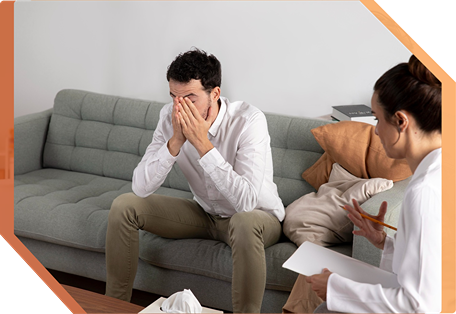
For many years, we have been helping patients diagnosed with agoraphobia to overcome this disorder and gain the clarity, perspective, and direction they need for a happy and healthy life.
You do not need to worry about judgment or lack of understanding at our facility - together, we will foster a sense of belonging, connection, and validation to navigate the challenges you are dealing with right now.
Whether you resonate with more conventional therapy modalities or cope with deep-seated emotional issues in meditation therapy or yoga therapy, our therapeutic approaches suit everyone regardless of the severity of their symptoms or background.
Reclaim your well-being in group therapy sessions - you get to hone your communication skills, cultivate self-awareness, and enjoy satisfying relationships with your peers while you are recovering.
For many years, we have been helping patients diagnosed with agoraphobia to overcome this disorder and gain the clarity, perspective, and direction they need for a happy and healthy life.
You do not need to worry about judgment or lack of understanding at our facility - together, we will foster a sense of belonging, connection, and validation to navigate the challenges you are dealing with right now.
Whether you resonate with more conventional therapy modalities or cope with deep-seated emotional issues in meditation therapy or yoga therapy, our therapeutic approaches suit everyone regardless of the severity of their symptoms or background.
Reclaim your well-being in group therapy sessions - you get to hone your communication skills, cultivate self-awareness, and enjoy satisfying relationships with your peers while you are recovering.
Agoraphobia is one of the anxiety disorders that may occur after a person experiences something that traumatizes them – for instance, you may be assaulted in public, which will make you scared of public places due to negative associations you have with this location and similar places.
We accept most insurance plans – it is our goal to accommodate as many clients as possible. You can check insurance coverage on our Insurance Verification page.
There are therapy modalities for patients of different ages and backgrounds – most individuals respond well to cognitive behavioral therapy (CBT) because it helps them challenge and replace intrusive thoughts with positive notions and ideas.
You might be stuck at home, lack social interactions, feel trapped for no evident reason, and deal with financial difficulties, unemployment, and loneliness once agoraphobia becomes severe. It may also create further problems for your mental health – if you need help with co-occurring mental health conditions, visit our What We Treat page to access additional support.
Do not delay a mental health appointment when agoraphobia turns into a major obstacle for your personal goals and professional aspirations – you should not have to feel anxious when interacting with other people or pursuing career opportunities. Check our Admissions Process page to see how you can start your treatment under our supervision.
Whether your goal is to sign up for residential agoraphobia treatment because the manifestations of this condition are out of control or you plan to recover in outpatient care after mastering healthy coping mechanisms, you should put your faith in mental health specialists who know how to overcome this debilitating disorder.
Get in touch with Red Rock Behavioral Health by calling (702) 903-1809 or visiting our contact page – let us help you develop new solutions and bring back the sense of security you have been missing.
Get in touch with Red Rock Behavioral Health by calling (702) 903-1809 or visiting our contact page – let us help you develop new solutions and bring back the sense of security you have been missing.
 Optimized by Seraphinite Accelerator